Table of Contents
1. The Problem: Rising Pest Losses Threaten Yields 2. What is Integrated Pest Management? 3. Why IPM Works for Malawi’s Farming System 4. Core IPM Strategies You Can Use Today 5. Agro-Ecological Zone Pest Profiles 6. Success Stories from Malawian Farmers 7. FAQ: Common IPM Questions 8. Disclaimer
<a id=”problem”></a>
The Problem: Rising Pest Losses Threaten Yields
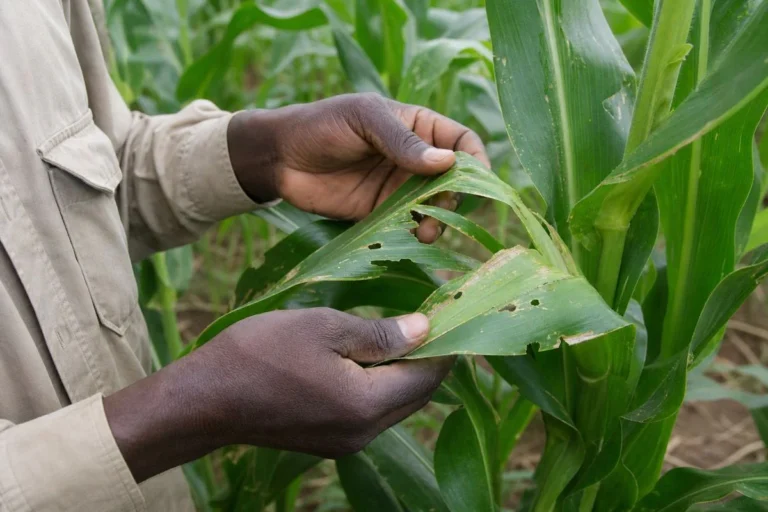
Plant pests are draining Malawi’s smallholder yields. Erratic rainfall, floods, and drought weaken crops and create ideal conditions for pest outbreaks—the fall armyworm has devastated maize fields nationwide. Without a plan, a single outbreak can wipe out an entire season’s investment in seed and labour. Chemical pesticides are costly and can harm beneficial insects, soil health, and farmer safety. Many smallholder farmers find themselves trapped in a cycle of rising input costs with diminishing returns.
<a id=”what-is-ipm”></a>
What is Integrated Pest Management?
Integrated Pest Management (IPM) combines prevention, monitoring, and targeted control to limit pest damage without over-relying on chemicals. The Ministry of Agriculture’s DARS treats IPM as part of Integrated Crop Management, where healthy soils support stronger plants and fewer pest outbreaks. Key principles:
- Prevention: Resistant varieties and healthy soil
- Monitoring: Regular scouting to identify pests early
- Thresholds: Acting only when pest levels justify intervention—when counts stay below the economic threshold, natural predators often handle the problem without sprays
- Multiple tactics: Layering methods for stronger results
<a id=”why-ipm-malawi”></a>
Why IPM Works for Malawi’s Farming System
Malawi’s farmers have practiced IPM elements for generations—neem, tephrosia, and wild basil (mphungabwe) protect crops while preserving beneficial insects. Formal programs now build on this knowledge. World Bank data shows Integrated Pest and Disease Management adoption in Malawi grew 410% against targets, as farmers find local botanicals often match commercial chemicals at far lower cost. World Agroforestry (ICRAF) training through the Ministry has equipped extension workers to support IPM rollout across districts.
<a id=”core-strategies”></a>
Core IPM Strategies You Can Use Today
These five tactics work together. Start with field hygiene and scouting, then add botanical or physical controls before reaching for chemicals.
1. Botanical Pesticides
Local plants provide effective pest control without expensive chemicals:
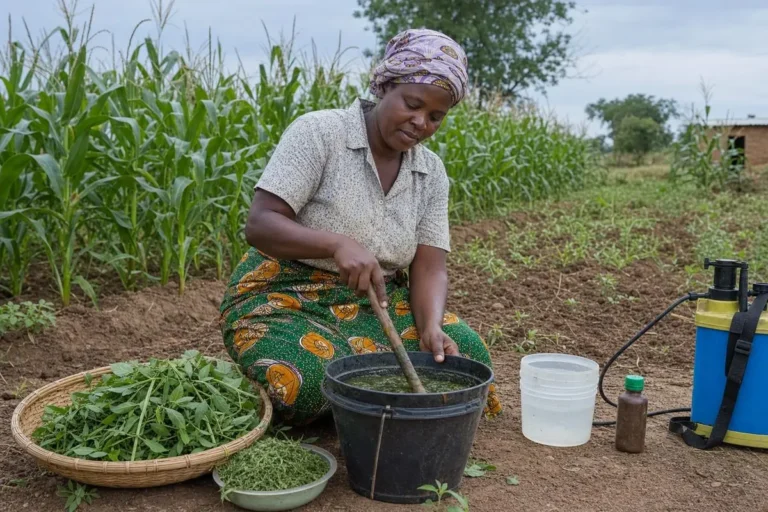
- Neem leaves: Crush and brew into spray for foliage pests
- Tephrosia/Volunteer: Natural broad-spectrum insecticide
- Lemongrass: Repels aphids and mosquitoes
- Vernonia amygdalina: Controls weevils and worms
2. Beneficial Insects
Encourage natural predators in your farm ecosystem:
- Ladybugs for aphid control
- Lacewings for mite management
- Birds for overall pest reduction
- Flowering plants for predator habitat
3. Crop Rotation and Resistant Varieties
Break pest life cycles by rotating crops. The Ministry recommends maize → beans → maize to break stem borer cycles, DARS- and CIMMYT-released resistant varieties, and companion crops like marigolds near vegetables.
4. Physical Barriers
Simple tools that work:
- Fine mesh nets for protecting brassicas from moths
- Row covers for seedling protection
- Trap crops like sunflowers for aphid monitoring
5. Field Hygiene
Clean fields reduce overwintering sites:
- Remove crop residues after harvest
- Clear weed hosts regularly
- Rotate fields annually
<a id=”aez-table”></a>
Agro-Ecological Zone Pest Profiles
Different regions face distinct pest challenges. Here’s what to watch for in each zone:
| Agro-Ecological Zone | Key Pests (District Examples) | Recommended Controls |
|---|---|---|
| Lake Shore (Nsiti, Liwonde) | Fall armyworm, aphids, snail | Neem spray, floating mats for snails |
| Central Region (Mchinji, Dedza) | Stem borers, weevils, locusts | Trap crops, tephrosia tea |
| Northern Highlands (Mzimba, Rumphi) | Colorado potato beetle, tomato hornworm | Companion marigolds, row covers |
| Eastern Plateau (Zomba, Mwanga) | Cassava mosaic, sweetpotato weevil | Resistant varieties, field clearing |
| Shire Valley (Chikwawa, Nsanje) | Flood-tolerant varieties needed, rodent damage | Raised beds, intercropping |
*Note: District names are examples within each zone. Consult local extension officers for specific recommendations. Matching controls to your zone avoids wasting inputs on pests that rarely appear locally.*
Across Malawi, extension officers report strongest IPM uptake where farmers combine botanical sprays with regular scouting rather than reacting only after visible crop damage.
<a id=”success-stories”></a>
Success Stories from Malawian Farmers
Happy Tchunguwe from Elangeni in Mzimba District shared how IPM transformed his maize farm: “Before, I was spending Kwacha 40,000 on pesticides each season with poor results. Now I grow marigolds between my rows and spray neem tea when I see the first armyworms. My yields are better, and my costs are down by two-thirds.”
Chisomo Joshua from Kaluluma in Kasungu uses a simple IPM approach with his tomato production: “I plant basil around my tomatoes—that keeps away the hornworms. I also spray a mix of chili and garlic when I see aphids starting. No more chemical bills, and my tomatoes sell for more at market.”
These farmers show that effective pest management does not require expensive inputs—just knowledge and consistent field observation.
<a id=”faq”></a>
FAQ: Common IPM Questions
Q: How often should I scout my fields for pests? A: Walk your fields weekly during peak growing season. Look under leaves and at crop bases where pests hide. Early detection prevents major damage.
Q: Can botanical sprays harm beneficial insects? A: When used correctly, botanicals like neem are safer than synthetic chemicals. Apply in early morning or evening to protect bees, and avoid spraying flowering plants.
Q: What’s the first sign of fall armyworm? A: Look for skeletonized leaves and green caterpillars with a distinctive white headband. Check maize silks and ears—armyworms spread rapidly.
Q: How do I make neem spray? A: Crush 10 fresh neem leaves, steep in 1 liter of water for 24 hours, strain, and add to 10 liters of spray water. Use within 24 hours.
Q: Where can I get certified plant doctors? A: Contact your nearest Ministry of Agriculture office or DARS extension center. FAO-supported plant health programmes also train local plant doctors for free pest identification and management advice.
<a id=”disclaimer”></a>
Disclaimer
This content is for educational purposes only. Farming outcomes vary depending on soil, weather, region, and management practices. Consult a qualified agronomist or extension officer before making major farm decisions.
—
Sources:
- FAO Malawi: https://www.fao.org/malawi/news/detail/malawi-strengthens-plant-health-systems-through-digital-innovation-under-the-africa-phytosanitary-programme/en
- FAO Fall Armyworm: https://www.fao.org/fall-armyworm/success-stories/detail/en/c/1417318/
- Ministry of Agriculture Malawi: https://agriculture.gov.mw/researchservices
- World Bank Blogs: https://blogs.worldbank.org/en/nasikiliza/back-basics-smallholder-farmers-embrace-integrated-pest-and-disease-management-malawi
- World Agroforestry (ICRAF): https://worldagroforestry.org/blog/2022/05/09/malawi-trained-integrated-pest-management-rout-fall-armyworm
- CIMMYT: https://www.cimmyt.org/news/strengthening-fall-armyworm-management-in-sub-saharan-africa/
- IFDC: https://ifdc.org/our-work/soil-health/
- IITA: https://www.iita.org/project/integrated-pest-management-ipm/